





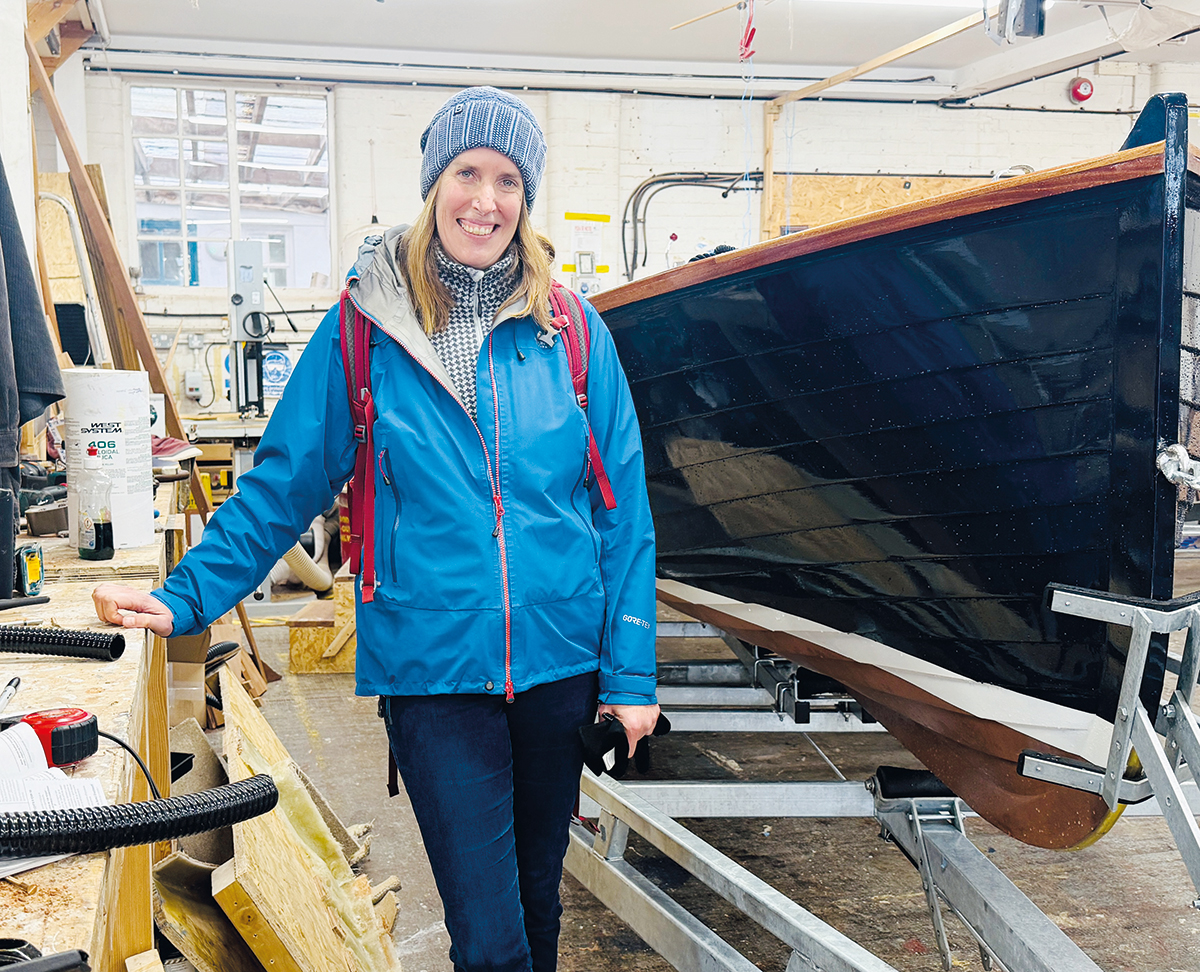
with Emily Stokes, tutor on the Boat Building Academy’s flagship boat building course in Lyme Regis.
AAS: Ten years ago you completed the BBA’s week-long Introduction to Boat Building course. What made you choose this particular course?
ES: I blame my sister for that! We used to meet halfway in Lyme Regis between our homes and walk along the front. We came across the Boat Building Academy on one of these meet ups and spoke to Former Principal Yvonne and tutor Matt about the boats, the students and the courses available. My sister, Laura, mentioned to them that I loved working with wood and rowing in Pilot Gigs down the coast and that I had always dreamt of building a boat. Yvonne and Matt said “you should come on a course”. So I looked at the options and decided to do a week-long course all about creating the initial set up of a traditionally built boat; building frames and the backbone for a clinker boat, including making the stem, keel, hog and transom for a small dinghy and fit the components together. I thought that if I could do a short course, enjoy it, understand some of the basics, use my hands to practically make something, then maybe just maybe I might be able to see my dream come true.
AAS: Until recently you have been a part of the shipwright team working on Victory Live: The Big Repair in Portsmouth. Can you tell us more about this project?
ES: It is a 10-year restoration project to get HMS Victory back to her former glory, as she was when she was about to take part in the battle of Trafalgar in 1805. Originally launched in 1765, for her to still be around over 250 years later is testament to previous restoration projects. The scale of the project is huge. £42 million will be spent to restore her and fight against rot and the slow destruction caused by wood-boring Deathwatch beetles. On the starboard side, where the prevailing weather has blasted into her from across the Solent, the restoration is extensive. Most of the framing and planking above the waterline is being replaced along with the lintels and sills around the gunports and some of the internal ceiling planks. Whilst I was at HMS Victory, I replaced some of her futtocks – the jointed parts of her framing. Each one was patterned and recreated using laminated teak planking and shaped to re-install. The weight of each futtock required the use of cranes to lift and secure them into place.
AAS: A former BBA student, how did you come to now be a tutor on the flagship 40-week course?
ES: When I was a student at BBA I could not have imagined being a tutor here! I have got previous teaching experience as a science teacher but that was a long time ago. After leaving the 40 week course I worked at Spirit Yachts in Suffolk and then at HMS Victory and was expecting to stay building and restoring boats for some time to come. When the opportunity arose to join the team as tutor, I needed some time to consider what to do, but this type of chance does not come around every day and I decided to go for it. I came back to school for a few days last year, to help on a course and see how I would get on. Everyone seemed happy with my input and I was asked if I would like to take the role up earlier this year.
AAS: What have you enjoyed most as a tutor?
ES: I especially like seeing how students progress from their first day here to developing and honing their skills after weeks of hard work. It is a fast-paced course with a new topic and project most weeks, lots of theory and practical hands on experience. It keeps everyone busy and on purpose.
AAS: What would you say to anyone considering a career in boat building?
ES: Come and see us and talk to us about what the opportunities are and if it is the career for you. BBA is a small snapshot of what yards are like to work in, as we build boats from scratch to launch on each course. You will get a flavour of what is involved. You can speak to current students, find out where graduates have ended up working, all around the world. You need to have a passion for learning new skills and knowledge if you come to BBA, and that is the same as the rest of the industry. Every day is a learning day. That never ends.
AAS: In terms of women in boat building what do you think needs to happen to encourage more women into the industry? What has your experience, as a woman, been?
ES: I came into the industry after more than two decades in work and I did not have a thought about my gender when I came to study at BBA. I have worked in predominantly male and female workplaces over the years. I am someone who wants to build a career in boat building and I happen to be a women. I now understand from talking to many people in the industry, both men and women, that there are many issues that affect whether women decide to come into the industry and whether they stay in it, but I feel that these are all manageable if approached in the spirit of collaboration. More information about the roles that are available is needed, understanding about what the working conditions are like, more opportunities to visit workplaces and to see more people that look like you in yards and more employers who are actively working towards a diverse workforce. More conversations need to be had, cultures need to shift focus slightly and once that happens having more women in the industry will become normalised.
AAS: You have also worked on luxury yachts with Spirit Yachts. What was your role?
ES: I was a boat builder at Spirit. Having left BBA only three weeks before I was what is known as a ‘greenhorn’ for sure. I had a solid foundation of skills and knowledge but had never worked on boats over 20ft before and ones that have large fit outs that require a very high level of attention to detail. I worked on every aspect of building the wooden parts of a yacht from setting up the strongback, making ring frames, planking, fit out, decking, painting and varnishing. It was a great place to refine my skills learning from the experts around me.
AAS: What does the future hold for you, and the BBA?
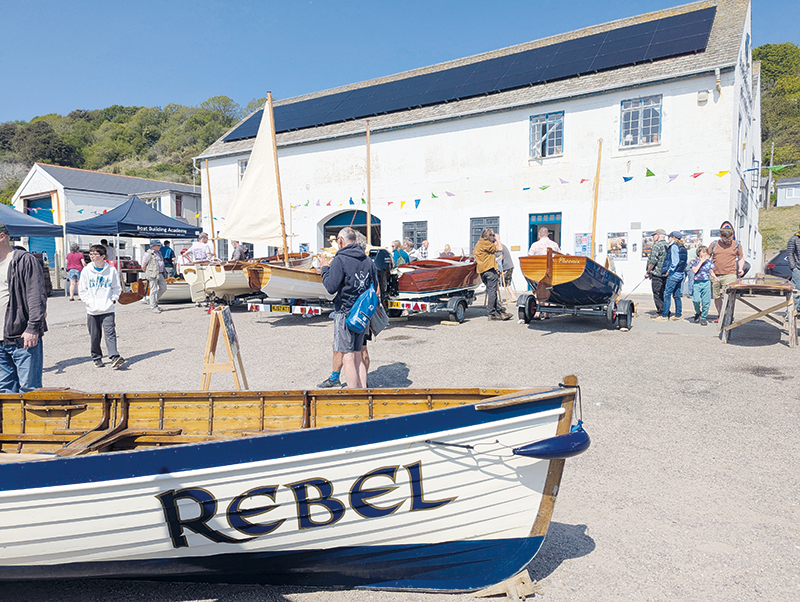
ES: I am about five months into the job now so it is still early days! I am looking forward to the launch day of my current class in December already. We will have been together for 40 weeks and it will be a proud moment to see all their hard work come to fruition. For BBA the future holds great ambition to further develop our home on Monmouth Beach to be able to house more students, provide better facilities and increase the opportunities for people far and wide to come and study with us. It is key for the heritage and future of this craft that we thrive.
AAS: You have travelled a great deal; do you have any favourite memories or destinations?
ES: Where to start?! Touching down in Oahu, Hawaii, and racing in a taxi to witness the end of the Molokai to Oahu women’s outrigger event was amazing. They race for 41 miles between the islands and I got to see the first team past the finish line. Hundreds of people lining the beach in Honolulu, clapping and cheering with conch shells blaring. A great way to start a visit to Hawaii. I also absolutely loved visiting Mongolia about 20 years ago. One of the most land locked countries in the world with beautiful mountains, lakes and people. Not many made roads then, hundreds of kilometres of open steppe, proper travelling.