




…Nick Ogden, Performance Marine Group Chairman.
AAS: Your background is in banking and financial technology, so how did you end up in the marine world?
NO: I have always been interested in industries where legacy structures are holding back growth and accessibility. My background in fintech – from creating the world’s first online shop, to launching Worldpay and later founding ClearBank – was really about modernising systems that people had accepted for decades as “just the way things work”. The marine industry, and particularly dinghy sailing, had some of the same characteristics. It is an incredible sport with a strong heritage, passionate communities and fantastic products, but many of the commercial and ownership models had not evolved alongside consumer expectations. When I became involved with Performance Marine Group, I saw a real opportunity to combine advanced manufacturing, digital technologies and financial innovation to help make the sport more accessible and sustainable for the next generation.
AAS: Can you tell our readers about Performance Marine Group?
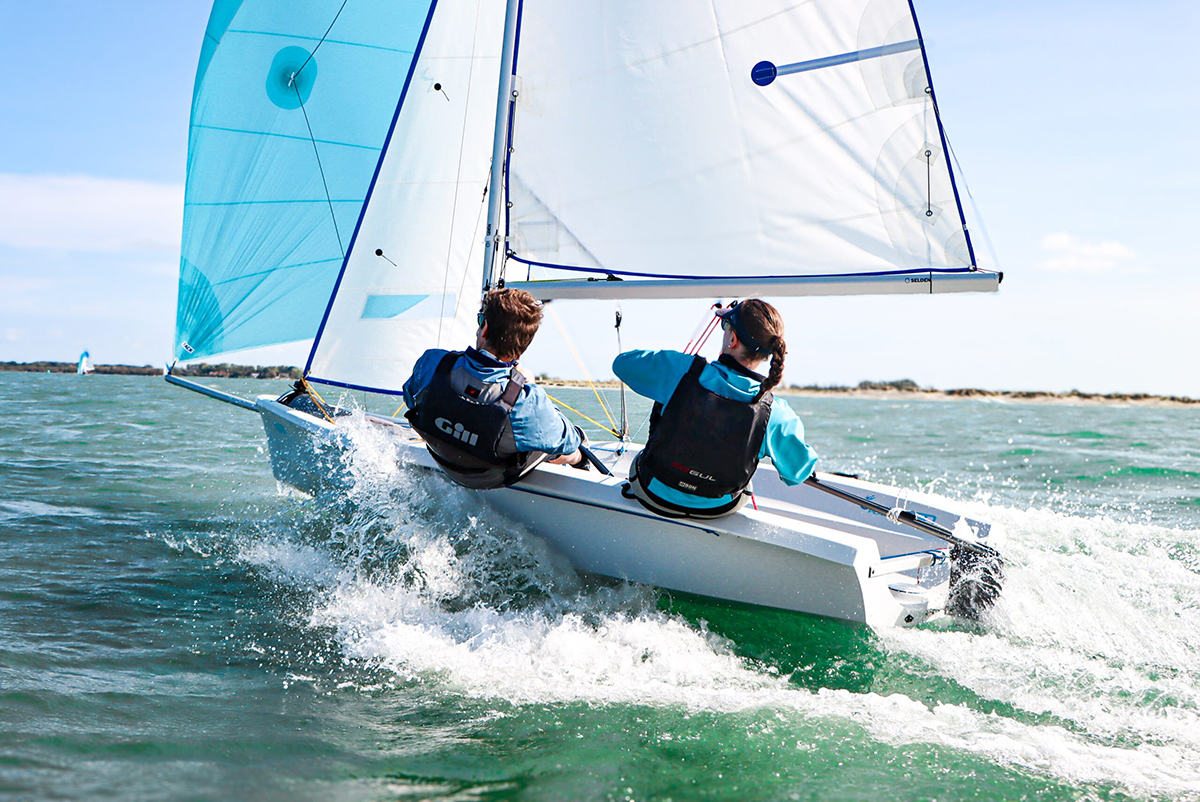
NO: Performance Marine Group is focused on high-performance sailcraft and powercraft manufacturing, with a strategy centred around innovation, quality and long-term sustainability within the marine sector. The group includes Performance Sailcraft, best known as one of the first builders of the Bruce Kirby designed Olympic-class Laser. Now marketed as the ILCA we own the Ocean Play range, which includes some of the best-known training and club boats in sailing. Over the last few years, we have invested heavily in manufacturing capability, technology and international expansion and 70 per cent of our manufacturing worldwide is exported. A major milestone was the opening of our new Australian production facility in Morisset, which is helping us meet growing global demand for Olympic-class boats while also supporting the development of new high-performance ranges. What is important to us is that PMG is not just about building boats – it is about strengthening the wider ecosystem around participation, clubs, dealers and long-term access to the sport.
AAS: Earlier this year Performance Sailcraft, best known as the builder of the Olympic-class Laser, launched Magic, a new fintech platform designed to reduce financial barriers in dinghy sailing. Can you explain how Magic works?
NO: The industry was ready for an improvement in customer service was one issue. Largely the whole customer service proposition has remained the same for years. That legacy tends to restrict consumer choice and slows the uptake of sailing, according to many of the sailors we have talked to in Europe and Australia. Fintech allows you to deliver a wide range of choices and options, and so we looked to find a way to improve access to the water and one recurrent obstacle was the cost of dinghy ownership. So, we looked at how we could change that to make access to dinghies simpler and easier. As a manufacturer we are fully aware of the cost of manufacturing, sales, distribution etc, and so we needed to develop a structure that supported those processes. We also own an AI business that has developed a technology that delivers asset intelligence to create risk models for lending. From that building Magic became logical, as when we modelled out the process, we found that we could deliver a proposition similar to personal car leasing but for dinghies, that we could also finance. Magic allows sailors and clubs to access a new dinghy with a 30 per cent initial payment followed by 24 interest-free monthly payments. At the end of the term they can buy the boat, upgrade it or return it. The boats are digitally tracked through NFC tagging and asset intelligence systems to support lifecycle management and transparent value outcomes. The key point is that we are not discounting boats – we are restructuring access to them.
AAS: Will Magic extend beyond Performance Sailcraft dinghies?
NO: Magic is a standalone business and through our partnership with Sporta plans to partner with other manufacturers in new sports sectors have already started. Although it launches initially with Performance Sailcraft, the platform itself is designed to support broader sports applications. The underlying logic works wherever you have durable assets with predictable residual values and strong owner communities. We see significant opportunity to work with other manufacturers over time, and some initial discussions have already started. Ultimately the objective is bigger than any one brand – it is about helping modernise access to all sports more broadly.
AAS: What are the current trends in dinghy buying?
NO: We are seeing a growing divide between aspirational demand and outright ownership affordability. People still want to sail, clubs still want modern fleets and parents still want pathways into the sport for younger sailors, but the upfront cost of ownership has become a much bigger consideration globally. At the same time, consumers increasingly expect flexibility. In almost every other area of life – from cars to software to entertainment – people are used to subscription-style access and predictable monthly costs. Marine has lagged behind that trend. We are also seeing strong demand return for durable club and training fleets, particularly through the Ocean Play range, where sailing schools and clubs are prioritising reliability, availability and lower lifetime operating costs, hence our development of Magic.
AAS: What else can the industry do to help break down the barriers to boating?
NO: Accessibility is the key issue. That includes affordability, but it also means simplifying the customer journey and making entry into the sport less intimidating. The industry has traditionally expected people to adapt to sailing, whereas I think we now need sailing to adapt more to modern lifestyles and expectations. Flexible ownership, stronger club support, modern digital experiences and clearer progression pathways will all help. We also need to recognise that younger consumers increasingly value access over ownership. If we want participation to grow, the sport needs to meet people where they are financially and culturally.
AAS: What else can we expect from Performance Marine Group during the remainder of the year?
NO: 2026 is very much about scaling internationally and continuing to invest in manufacturing capability and product development. We are expanding production across multiple facilities, continuing the rollout of Magic internationally and developing new products that combine advanced materials, digital technologies and high- performance design. There will also be further investment in dealer and club support infrastructure, because we see those relationships as fundamental to long-term growth. The focus is not just on building more boats, but on creating a stronger and more sustainable ecosystem around them.
AAS: Where do you see technology making the biggest impact on leisure boating in the next few years?
NO: I think the biggest impact will come from the convergence of digital technologies, AI and asset intelligence rather than any single breakthrough product. We are moving towards a world where boats become increasingly connected assets – with better diagnostics, predictive maintenance, lifecycle management and integrated financing. That creates better ownership experiences, better safety outcomes and stronger residual values. Advanced manufacturing will also continue to evolve rapidly, particularly around composites, lightweight structures and more sustainable production methods. The marine sector has historically been slower to digitise than industries like automotive or banking, but I think that changes significantly over the next decade. We can turn a dinghy into a payment device already, imagine saying to the bar staff just go and tap my dinghy to pay.
AAS: Will Performance Marine Group be at the Southampton International Boat Show this year?
NO: We attended Southampton International Boat Show last year, opening the show with the iconic Thunderchild II, and to launch our industry-first lightweight and high-speed carbon-fibre performance dinghy, the Rascal. The show provided an excellent platform to launch the Rascal, receiving incredible interest from show visitors and industry stakeholders. With 2026 being very busy for us on the production side, we do not have time to be there this year, but hope to drop in as visitors as the show remains one of the most important events in the marine calendar and an excellent opportunity to engage directly with sailors, clubs, dealers and the wider industry.
QUICKFIRE QUESTIONS
What technology do you wish you had invented?
The internet browser – because it fundamentally changed access to information and commerce globally.
Favourite country to visit on holiday?
Australia. Great sailing culture, fantastic lifestyle and an incredibly positive outdoor mentality.
What is your favourite sport to play/watch?
Watersports and sailing, for sure, but the number one is endurance powerboat.
Moment in history you would love to have been at?
1972 London to Monaco Powerboat race.
What is your favourite film?
Seven Samurai.
If you could have dinner with one person, who would it be?
The late Bruce Kirby, an extraordinary designer who has brough sailing to a huge number of people. As an innovator, I appreciate the challenges he faced during the evolution of the Laser.