By Michal Maslowski, Chief Digital and Information Officer, D-Marin
In the past, boat owners sailing into a marina understood what was to come when berthing or passing through. You may have needed to locate someone to provide a physical key or visit reception to fill out lengthy paperwork. You probably needed a conversation with the harbourmaster to understand the marina layout and learn where to turn on the electricity.
But things have changed.





Marina technologies are developing rapidly, and these innovations are creating a much more seamless experience for boaters arriving to dock or stay for a holiday. Boat owners now expect an experience that is far more digital and seamless than it was a decade ago.
But digital does not have to mean less personal. Used in the right way, technology can remove unnecessary administration and give marina teams more time and better information to focus on the personal service that customers value most.
Technology reduces friction and gives more time for customers
There is a real cost to the friction caused when a berthing experience is not seamless. At D-Marin, we have seen how digital services can reduce unnecessary steps and make everyday marina interactions faster and easier.
But the point is not simply to digitise more of the customer journey. It is to remove the routine tasks that technology can handle well, so our teams can spend more time on the interactions where a personal touch really matters.
According to a 2025 Research and Markets report, the global marinas market is projected to grow from $18.99 billion to $25.12 billion by 2030, with growth driven explicitly by investment in smart technologies, automated marina management, and digital booking and payment systems.
This is not a niche trend; it is the direction of the industry. But the operators that benefit most will not necessarily be those deploying the most technology. They will be those using it most effectively to improve the customer experience.
At D-Marin, we have invested more than €20 million in digital infrastructure in recent years, but I want to be clear about what that actually is: it is a customer experience project, not a technology one.
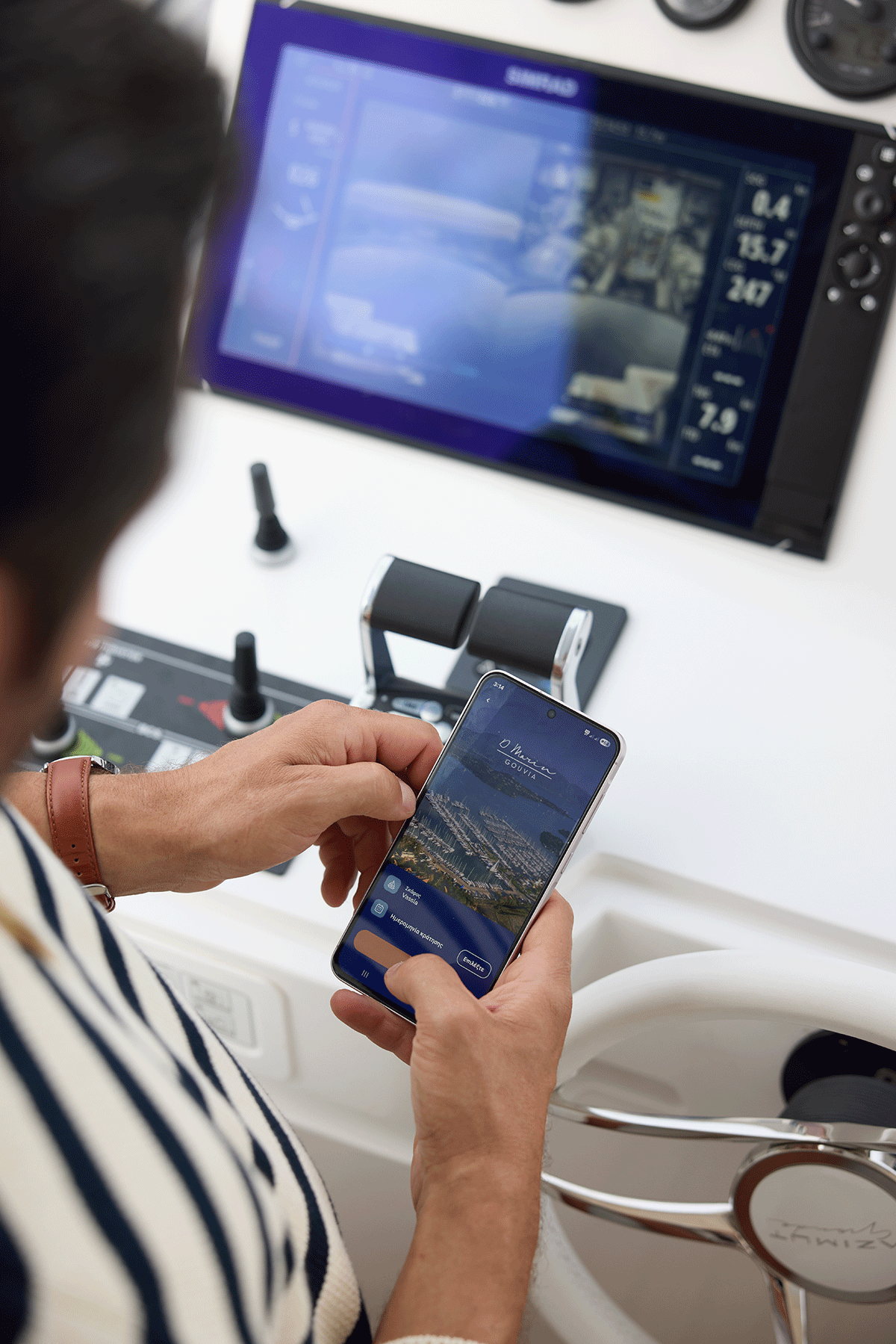
We now have more than 3,000 Smart Pedestals and 10,000 Smart Sensors deployed across our network, giving owners real-time visibility of key information. Just as importantly, that technology gives our teams better information and allows them to anticipate where support might be needed.
The aim is not to replace the human experience, but to make it better.
Francesco Antolini, a Sunseeker Manhattan 68 owner stationed at D-Marin Punta Faro, has been yachting for over 30 years. He has personally experienced just how much marina technology has changed over that time, and what it can now offer today’s boaters:
“The difference between a marina that has embraced technology and one that hasn’t is not subtle you feel it immediately. Being able to manage my boat remotely, monitor everything from my phone, and arrive knowing that everything is already taken care of changes the quality of the whole experience. D-Marin keeps raising the bar every year, and that matters to someone who is on the water as often as I am. Technology is no longer a bonus. It is part of why I stay.”
The marina experience in a digital age should still feel personal
A recent report stated that the global marina management software market is projected to nearly double by 2035, growing at 7.54 per cent annually, driven by increasing digitalisation and demand for operational efficiency.
The deeper shift is not about apps or sensors in isolation. It is about how effectively an integrated marina system helps its people deliver a better experience.
At D-Marin, we can see what that integration delivers in practice. Ninety-three per cent of our guests use the D-Marin app to remotely secure their berths and have live access to Smart Sensor data during their stay.
This gives customers peace of mind when they are away from the boat. Our data can flag an issue before it escalates, allowing our team to deal with it immediately. The system can identify that something needs attention, but it is our people who step in, resolve the problem and reassure the customer.
Grand View Research reports that 71 per cent of guests now prefer to book their reservations via smartphone. This mobile-first approach to marina management is something guests and boat owners have come to expect.
But convenience alone does not create loyalty. The strongest marina experiences combine digital ease with the reassurance, expertise and personal attention of an experienced team. At D-Marin, that combination is reflected in a Net Promoter Score (NPS) of 62.
The future of the marina experience is therefore not a choice between technology and people. The most successful operators will bring the two together: using digital tools to remove friction, make routine interactions seamless and identify issues earlier, while giving their teams more time to focus on the moments where personal service matters most.
For me, that is ultimately the measure of successful digital transformation: not how much technology we deploy, but how effectively it helps our people deliver a better experience for our customers and, ultimately, build the kind of loyalty that technology alone never could.
To find out more about D-Marin visit the website d-marin.com.