









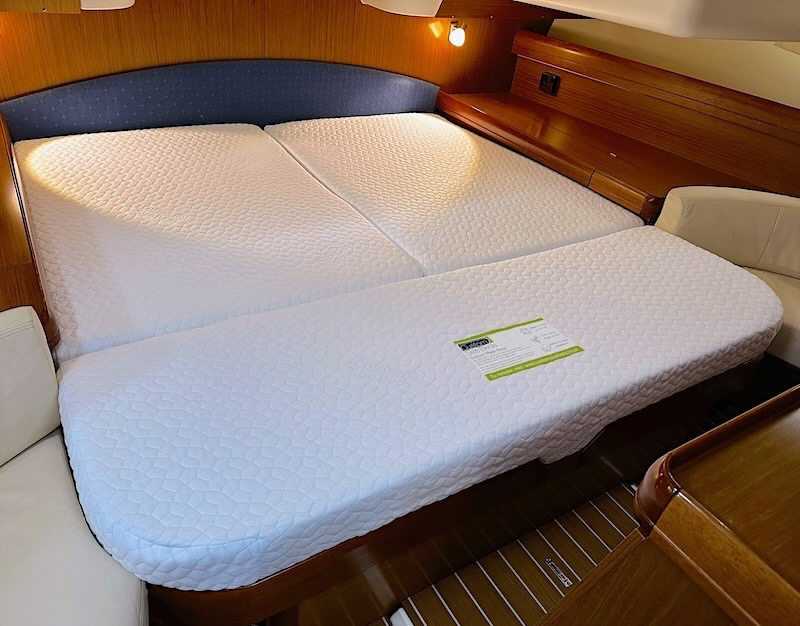
Sleep and mattress expert, Myles Hardy from Custom Size Beds, explains why many people come back from their first trip of the year feeling more tired than when they left.
It’s not just travel fatigue; it’s a combination of disrupted sleep environments, poor mattress support and seasonal factors that quietly impact sleep quality.
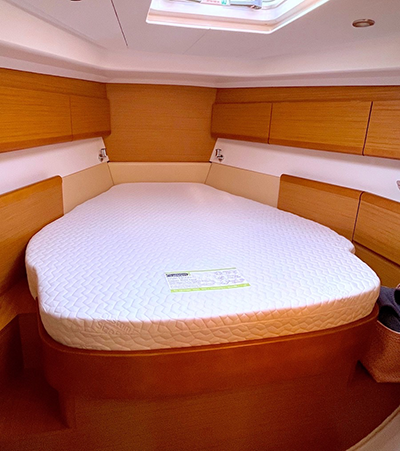 A lot of people expect to sleep brilliantly on their first trip away, but the reality is often the opposite. Your body is highly conditioned to its usual sleep environment, so when you suddenly change the surface, the support, the temperature and even the ambient noise, it creates low-level disruption throughout the night.
In boats, especially, the biggest issue is compromised support. Mattresses are often cut to fit awkward spaces, but if the density isn’t right, your body is constantly adjusting to stay comfortable, even if you don’t fully wake up. The biggest issue we see with campervans and boats is compromised support. These spaces often require non-standard mattress shapes, which means people end up using foam that isn’t designed for consistent spinal alignment.
There’s also what we’d call a ‘settling effect’. On the first night, your brain remains slightly more alert in an unfamiliar environment, something rooted in evolution, so you spend less time in deep, restorative sleep. By the second or third night, that typically improves.
Temperature plays a bigger role than people realise, especially at this time of year. In boats, insulation is minimal, so you get sharper fluctuations between evening and early morning. If your core temperature isn’t stable, your sleep quality drops quite quickly.
If you’re waking up feeling stiff or more tired than usual, it’s rarely just ‘a bad night’s sleep’- it’s usually a combination of poor support and environmental change. That’s why having the right mattress for the space isn’t a luxury in these settings, it’s essential.”
Top tips for sleeping better on boats
1. Prioritise proper support – not just comfort
The biggest mistake people make is assuming any foam mattress will do. In smaller spaces, mattresses are often cut to fit, but if the density and support aren’t right for your body, your spine won’t stay aligned. That leads to micro-adjustments all night, even if you don’t fully wake up.
2. Don’t underestimate temperature swings
In boats, you’re far more exposed to the elements. The temperature can drop significantly in the early hours, which disrupts your sleep cycle. Layering your bedding properly is often more effective than relying on a single heavy duvet.
3. Get ahead of light disruption
Longer daylight hours can throw off your body clock, especially in spring and summer. If your sleeping space doesn’t block light effectively, you’re more likely to wake earlier and get lighter, less restorative sleep.
4. Ventilation is a balancing act
Fresh air helps regulate temperature, but opening windows can introduce noise, damp air, or pollen. It’s about finding the right balance – too stuffy or too exposed can both negatively affect sleep quality.
5. Give your body time to adjust
The first night is rarely your best. Your brain stays slightly more alert in a new environment, which reduces deep sleep. If you can, plan for a slower first day rather than expecting to feel fully rested straight away.
6. Treat your sleep setup as essential, not an afterthought
People invest heavily in the boat itself, but overlook where they’ll spend a third of their time. In these environments, a well-fitted, supportive mattress isn’t a luxury – it directly impacts how rested you feel the next day.
Find out more: https://customsizebeds.co.uk/boat-mattresses/