
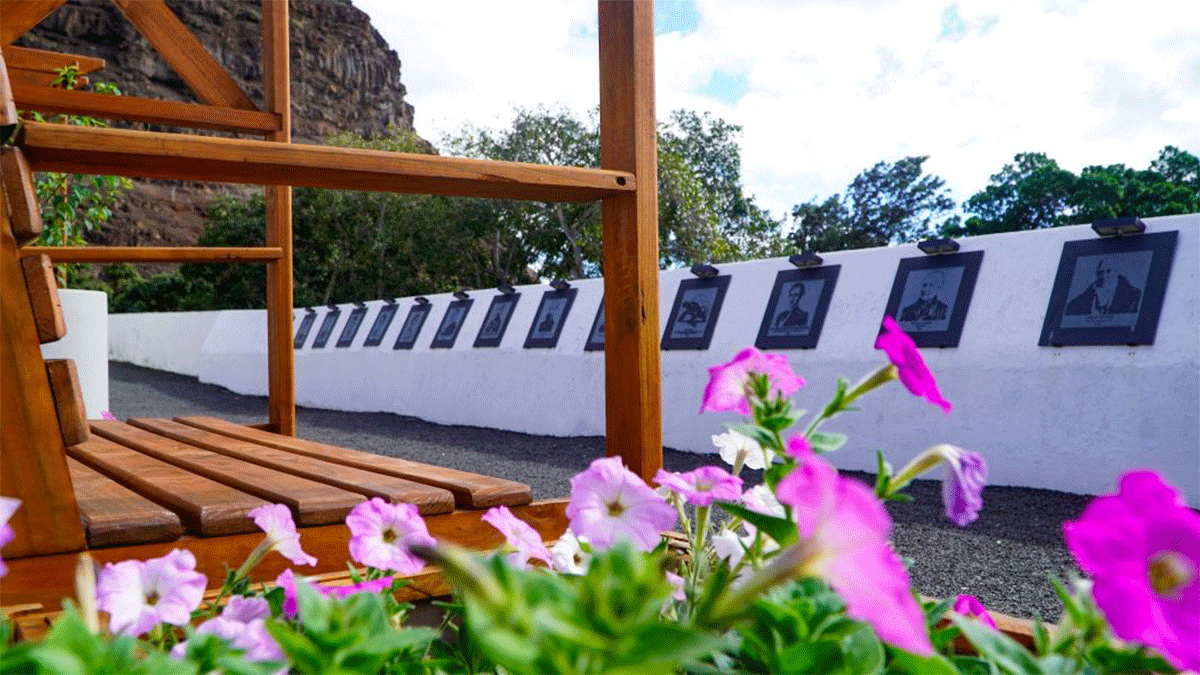
Stories of the fascinating figures who have visited St Helena in the South Atlantic over the past 500 years are being brought to life through a new interpretative installation in the heart of Jamestown, as new research reveals a strong appetite among UK long-haul travellers for history and heritage experiences.
A Walk Through History 1, developed as part of the UK Government-funded Tourism Development Programme, features an initial 28 plaques commemorating internationally significant figures who have visited St Helena since its discovery. Set along the historic Castle Terrace wall, the plaques tell their stories chronologically, revealing the island’s far-reaching global connections.
Among those featured are Napoleon Bonaparte; King Dinuzulu, who was exiled to St Helena by the British; and Jonathan the tortoise, a current island resident and Guinness World Records title holder as the world’s oldest living land animal, at around 194 years old.
The project also includes improvements to the nearby Dolphin Stone Garden, home to a stone inscribed in 1645 by the crew of the British ship Dolphin. Sailors once left letters beneath the stone or at the island chapel for passing vessels to collect and deliver, long before St Helena’s first official Post Office opened in 1815.




The installation comes as 2026 research commissioned by St Helena Tourism 2 finds 67% of UK long-haul travellers say historic sites and heritage stories are among the experiences they find most appealing on a leisure trip, the highest-ranking experience tested. Among travellers aged 45 and over, the figure rises to 80%.
The findings are echoed by Mastercard research 3 last year, which highlighted growing demand for historical experiences, with 75% of Brits eager to experience something rich in heritage, up 54% from 2024.
Although remote, St Helena has played a role in world history for centuries. Discovered by the Portuguese in 1502, it became a key port on major sea routes and has links to the East India Company, military and maritime history, and, most famously, Napoleon, who was exiled there in 1815 and died on the island in 1821.
Jonathan Passaportis, Head of Tourism for St Helena, said: “St Helena is known around the world as the place of Napoleon’s final exile, but that is only one chapter in an extraordinary story stretching back more than 500 years. A Walk Through History gives visitors a new way to uncover some of the people and stories that connect this small island in the South Atlantic with the wider world.”
Beyond the installation, visitors can explore Jamestown’s historic buildings and fortifications and discover sites associated with Napoleon, including Longwood House, where he lived during his exile, and his original tomb in Sane Valley.
For history lovers planning their travels for 2027, St Helena offers more than five centuries of stories to discover in one of the world’s most remote destinations.
2 The “Remote by Nature. Exceptional by Experience” Traveller Research was conducted by GSIQ Tourism Insights in March 2026 among 2,006 UK adults open to international long-haul travel.