Friday 21 August will be the first-ever UNESCO International Day of Underwater Cultural Heritage.
The event will be celebrated by maritime archaeological organisations and communities around the world. It is particularly significant as it sits within the 25th Anniversary of the 2001 Convention on the Protection of the Underwater Cultural Heritage.




The above video was created by the Accredited NGOs to mark this occasion.
The international network of Non-Governmental Organisations (NGOs) Accredited by UNESCO, will launch a 24-hour stream of underwater shipwrecks. The video will be accessible on their YouTube channel: UNESCO 2001 Convention Accredited NGOs showing how they have investigated, documented, and studied underwater archaeology. The video takes viewers below the waves to explore shipwrecks worldwide, showcasing the hard-to-reach world of underwater cultural heritage and making it accessible to everyone by video and 3D models.
The Accredited NGOs Network to the Convention, made up of dozens of organisations from around the globe have invaluable knowledge of current practices and issues in the field of underwater archaeology. They protect underwater heritage through science and community participation, promoting its preservation and avoiding its exploitation at a national, regional, and international level.
The Convention, adopted in 2001, sets two key points for the preservation of underwater cultural heritage. First, the Convention moves the focus from commercial salvage and treasure hunting towards scientific investigation, preservation, and education on underwater cultural heritage, viewed as a cultural resource, not a commodity. Secondly, underwater heritage is part of everyone’s shared history and as such, it must be protected and preferably left in place.
Nigel Atkinson Esq. HM Lord-Lieutenant of Hampshire and President of the Maritime Archaeology Trust said: ‘Our maritime Heritage has been an integral part of British culture and identity for many centuries. It is great to see this as a resource that is valued for its societal benefit and heritage rather than monetary value.’
The Director of the Dutch National Maritime Museum, said: ‘The Het Scheepvaartmuseum is pleased to support the first International Day of Underwater Cultural Heritage and commends the global activities of our heritage community such as the work on the Dutch wreck Klein Hollandia in British waters.’
Garry Momber, Chair of the Accredited NGO Group and Director of the Maritime Archaeology Trust said: ‘The underwater cultural heritage has been overlooked for decades as it is out of sight and out of mind. Modern technology is now allowing us it access these sites. This UNESCO UCH day will help raise the profile of this incredible legacy that represents a global underwater museum where each wreck has its own natural aquarium.’
NGOs are co-organising and co-delivering initiatives locally on the day and are inviting the public to join first-hand in the celebrations to virtually reach across the ocean and bring international communities closer through underwater cultural heritage.
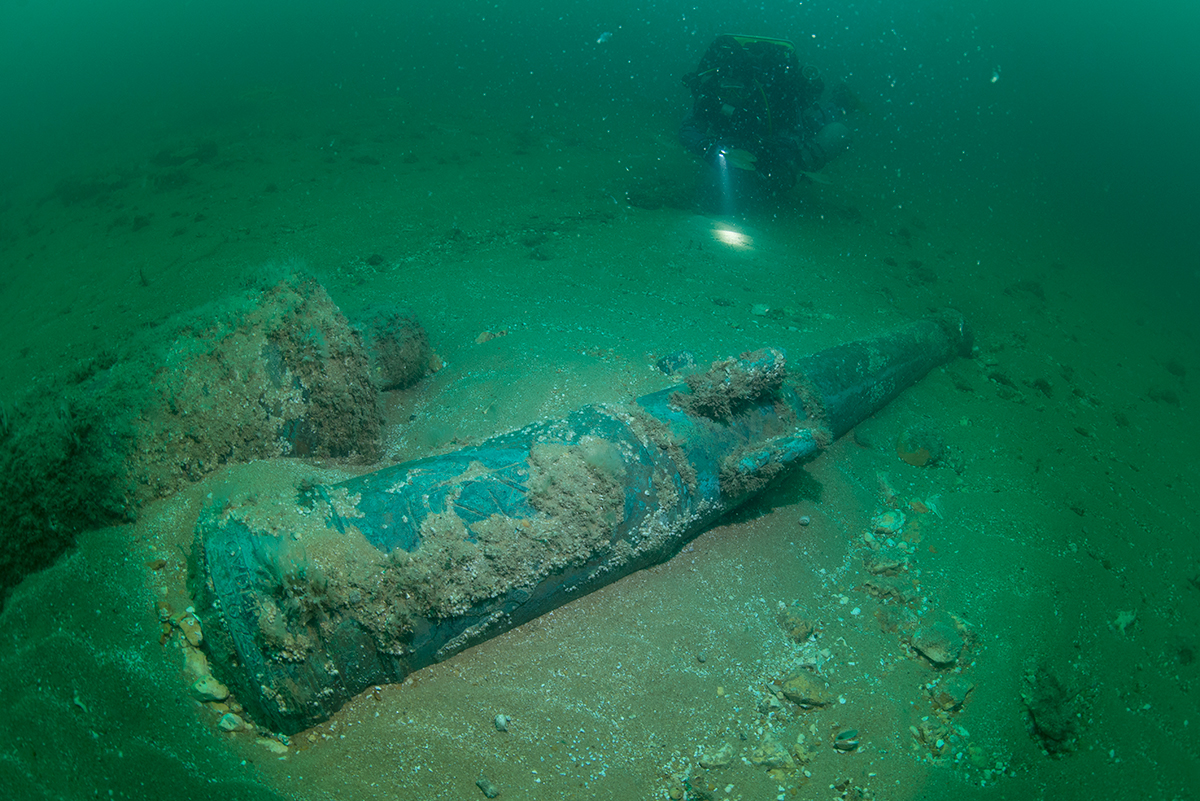
On International Day of Underwater Cultural Heritage, the Nautical Archaeology Society (NAS) will take a group of recreational divers on an underwater archaeological tour of the Klein Hollandia. This Dutch wreck has been lying in British waters for the last 354 years and due to its remarkable story and significant preserved remains on the seabed, it has been declared a Protected Wreck under English law. The NAS runs regular Protected Wreck Days to this site, to facilitate responsible access for divers.
A registered charity, the Nautical Archaeology Society has been researching, recording and protecting our threatened coastal and underwater heritage for the benefit of everyone since 1972.
NAS believes that everyone can benefit from the unique and fascinating resource that is the world’s maritime heritage. The belief is that when people are given the opportunity to learn about their heritage and help to research and record it, they come to understand it. When they understand it, they begin to value it – and when they value heritage, they become the best advocates for further research and protection.