

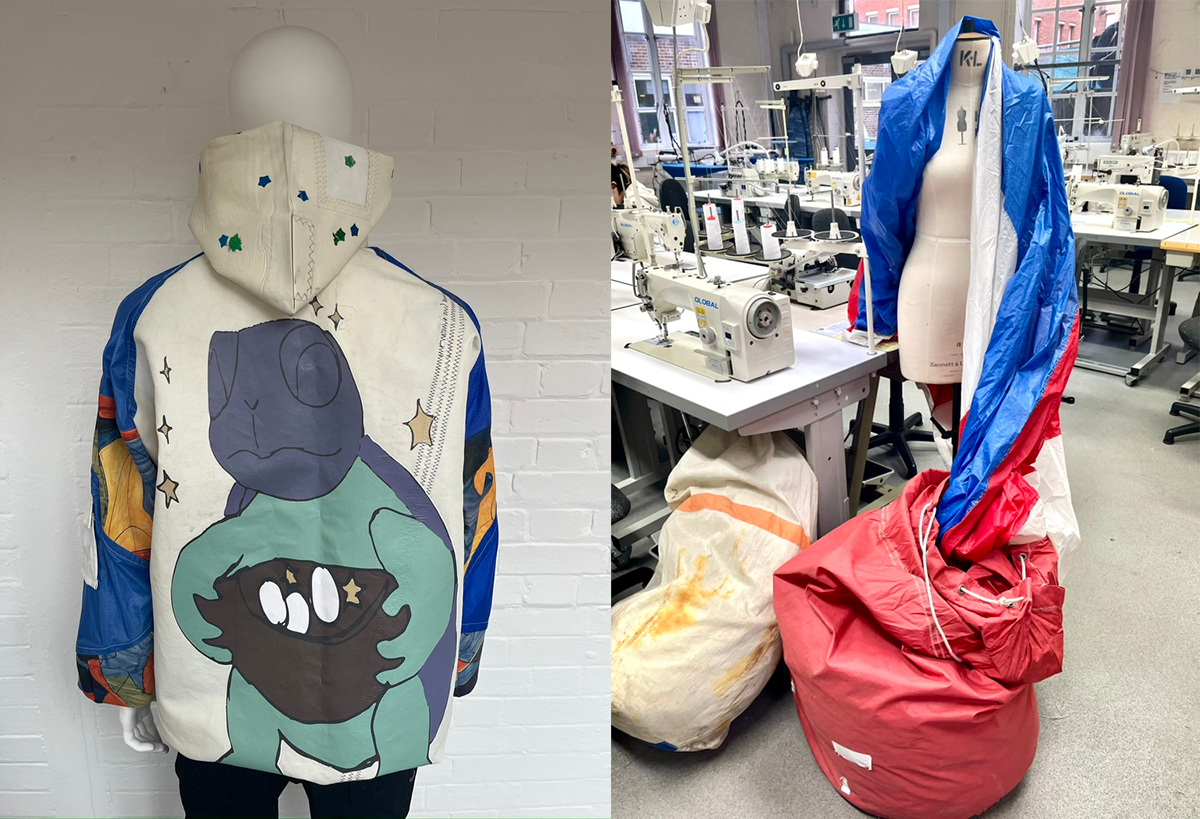
Cambridge School of Art, Anglia Ruskin University, will run its sail-based sustainable fashion project again in 2026, following a successful pilot delivered in partnership with Clean Sailors during the 2025 academic year.
The project sits within the Sustainable Design and Innovation module on the Fashion Design undergraduate programme and challenges first-year students to work with end-of-life sails as their primary textile. Students are tasked with producing garments using zero-waste pattern-cutting techniques, while critically examining fashion’s environmental impact, material lifecycles and design responsibility.
More than 97% of sails are currently sent to landfill or incineration once they reach the end of their sailing life. The 2025 collaboration offered an alternative use for this highly durable material, allowing students to assess sailcloth as a technical textile and respond to its physical constraints, history and wear.




During the pilot, Clean Sailors donated a 30-year-old mainsail and a large spinnaker, which were deconstructed and reused across multiple student projects. Feedback from staff and students highlighted the value of working with a demanding, non-traditional material early in the degree, prompting the University’s decision to continue the collaboration into 2026.
“Working creatively with sail fabric encouraged them to consider both functional and aesthetic durability in their designs. We’re excited to collaborate with Clean Sailors again this year to further explore the possibilities of this under-used textile resource.”
Second year ARU student Asmeet Kaur Wadhwa, who took part in the pilot, has described how working with the sail fabric was a challenging but rewarding experience.
She said: “Designing my sustainable cagoule from recycled sail fabric encouraged me to let the concept and material evolve together rather than forcing a fixed outcome.
“Working with sailcloth, marked by journeys of its own, taught me that releasing expectations can lead to unexpected results, highlighting the unusual characteristics of the unfamiliar fabric, which felt much closer to how sustainable design actually works.”
The 2026 module will continue to incorporate zero-waste construction, material experimentation and critical discussion around fashion’s role in global environmental challenges, including water pollution and microplastic release. Clean Sailors will again support the programme through material donations and student awards recognising both technical achievement and thoughtful use of reclaimed sail textile.
The
Sustainable Design and Innovation module will run from January 2026 and is available to first-year Fashion Design students at Cambridge School of Art, Anglia Ruskin University.Holly Manvell, founder of Clean Sailors here:
“Bringing this course into its second year is so exciting – working with end-of-life sails asks students to design with responsibility in mind, turning what would be waste into objects of value. Just as importantly, it gives them a clear, practical vision of a fashion future where creativity is measured not only by aesthetics, but by impact and where designing better systems is part of the designer’s job.”