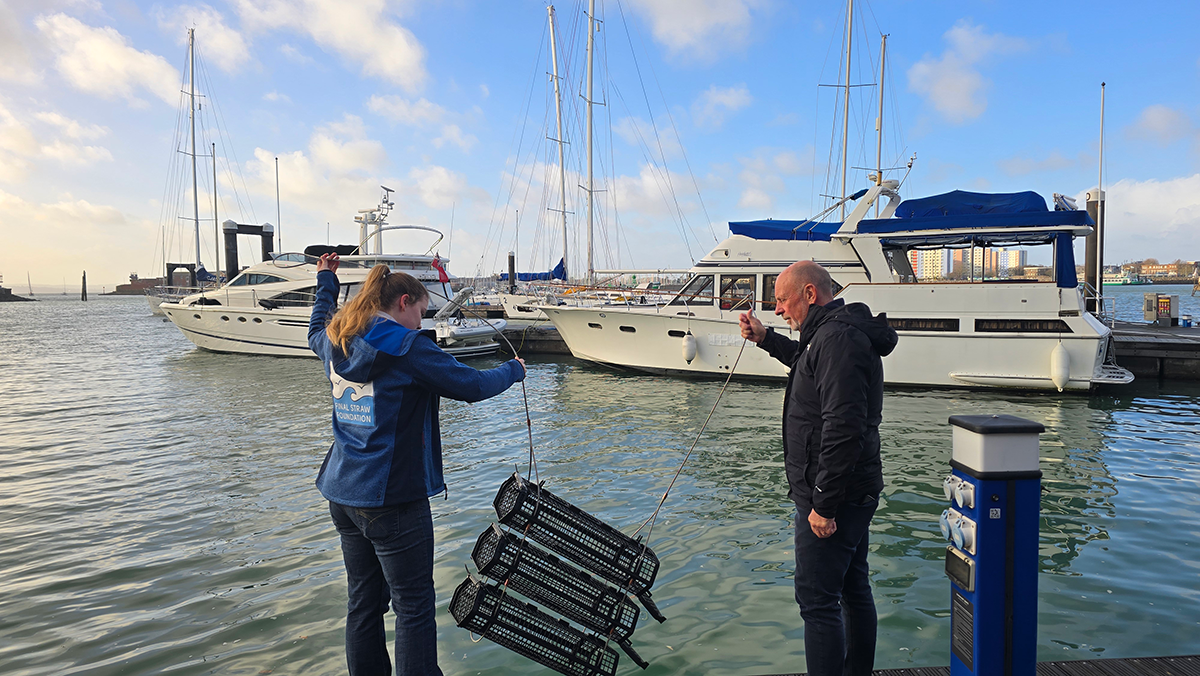
Gunwharf Quays has announced that 2,200 European Flat oysters have been introduced to the Solent as part of an environmental initiative in partnership with the Final Straw Foundation to revitalise the local marine ecosystem.
The newly installed oysters serve as a nature-based solution to water quality issues, naturally filtering water as they feed. As a result, the colony will filter 440,000 litres of water each day, totalling 160 million litres of water annually.
By removing harmful excess nutrients and fine sediment, the oysters also significantly improve water clarity which, in turn, creates better conditions for marine plants and wildlife to grow and thrive.








The initiative is also expected to support biodiversity in the Solent. The oyster baskets provide a sheltered sanctuary for smaller marine species, while over time the oysters will reproduce, helping to restore oyster populations across the Solent. These oyster reefs can also contribute to protecting coastlines from erosion and supporting a wider range of marine life.
Yvonne Clay, Centre Director at Gunwharf Quays, said: “Sustainability is at the heart of our ethos here at Gunwharf Quays, and we recognise the vital role we must play in protecting our local environment. By hosting this initiative, we aim to lead by example and provide a blueprint for how organisations like our own can actively support and restore their surrounding habitats. We look forward to seeing this project flourish and witnessing the impact the oysters will have to the local marine environment.”
Hannah Cooper, Project Manager at Final Straw Foundation, added: “We’re really excited to be partnering with Gunwharf Quays on this project. Native oysters are both a keystone species and ecosystem engineer, meaning they play a vital role in creating and supporting precious marine habitats and wildlife. The benefits from introducing this species at Gunwharf Quays will be felt across the Solent for years to come.”
The project will be monitored through regular water quality checks and oyster growth assessments to understand its long-term impact. It will also be used to support education work with local schools and communities, highlighting the role of nature-based solutions in improving water environments.
This initiative is based on the Solent Oyster Restoration Project by the Blue Marine Foundation, with the project team also benefiting from the facilities provided by the University of Portsmouth to bring this vision to life.