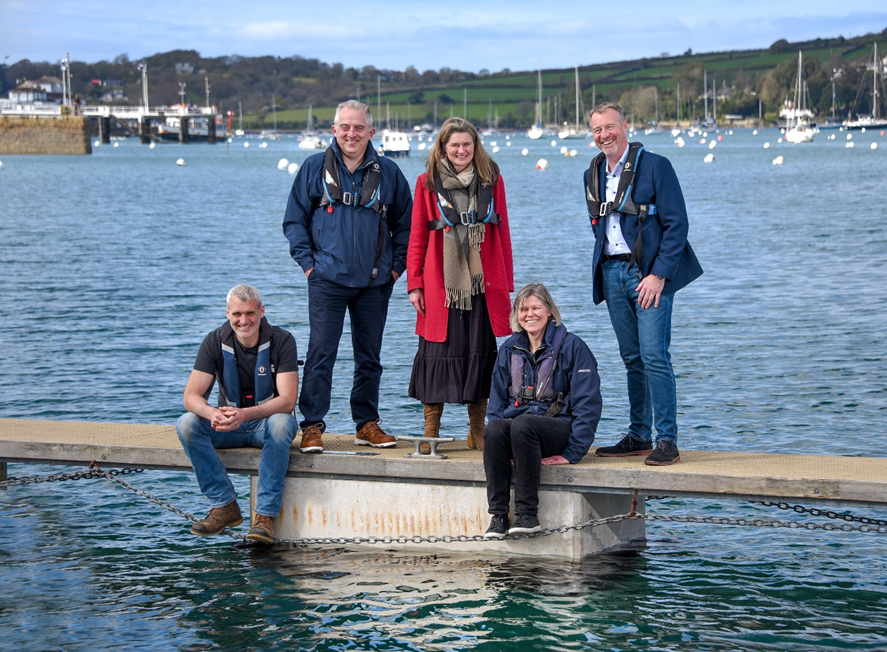
Falmouth Harbour is trialling the world’s first all-concrete marina pontoon float – designed and built by the team at ScaffFloat in neighbouring Penryn – in a first step to removing all Expanded Polystyrene (EPS) floats from its leisure and commercial operations.
Falmouth Harbour has pledged to move away from EPS products in the light of mounting evidence for the damage polystyrene microplastics in the world’s oceans inflict on the marine environment and life within it.
Polystyrene – globally used for its lightness and buoyancy properties – is made from fossil-fuels (oil), is virtually un-decomposable and when it breaks down into microplastics can be ingested by marine life with devastating consequences.








“The amount of broken up polystyrene around our creeks and rivers – particularly after this year’s storms – is awful to see and very hard to clean up without damaging the delicate ecology of our shorelines,” says Falmouth Harbour’s Environment Manager Vicki Spooner. “Expanded Polystyrene fragments in the marine environment pose a serious ecological concern as seabirds, fish, turtles and other fauna mistake EPS beads for food, which can cause internal injuries or death – and entering the food chain poses health risks to humans as well.”
Penryn marine company ScaffFloat Ltd have tackled the challenge of finding alternatives to traditional pontoons with concrete-coated EPS floats by inventing the “Reef Float.” Their first commercial prototype, made entirely from concrete, has been undergoing trials beneath a Falmouth Harbour pontoon.
ScaffFloat have developed the new Reef Float product as part of a business development project which received £284,787 from the UK Government through the UK Shared Prosperity Fund as part of Cornwall’s Good Growth Programme.
“We replaced a failing EPS pontoon float at Falmouth Harbour with a Reef Float, where it survived all that this January’s storms could throw at it,” says ScaffFloat founder and MD Toby Budd, who is behind the new float concept. “It’s what we would expect, of course, as we’ve designed it to be strong with an ultra-long life. But it’s also completely inert in the marine environment and 100% recyclable, so a game-changing alternative to the EPS floats currently used all over the world.”
Local MP Jayne Kirkham, checking out the new Reef Float, says, “This is exactly the kind of innovation we want to see in Cornwall – local businesses developing practical but cutting-edge solutions to global environmental challenges.
“Cutting polystyrene pollution from our waters while creating skilled jobs is a win for our marine environment and our economy. I’m proud to see government funding helping projects like this lead the way.”
The Reef Float’s buoyant core is made using ultra-low-density waterproof concrete, instead of EPS foam, and this core is then cast inside a high-strength engineered concrete skin. In the highly unlikely event that a Reef Float ever failed, the materials would simply sit inertly as stone in the marine environment – whereas when the concrete shell of an EPS float cracks open, it exposes the polystyrene foam core to the marine elements.
Falmouth Harbour CEO Miles Carden says, “Falmouth Harbour has made the conscious decision to move away from EPS foam pontoons in all our operations and it’s fantastic that our neighbours at ScaffFloat are the first company to offer a plastic-free alternative.
“Reef Floats are easily installed, in situ, on a rolling basis, as and when we need to replace old EPS floats and they have a zero-cost, 100% recyclable end-of-life disposal. It’s another tremendous example of Cornish ingenuity and we look forward to working with them into the future.”
The Reef Float team has just been shortlisted for the Innovation Award at Marina26 in Australia this May – with an invitation to attend and talk at the biggest marina conference in the world demonstrating what a major issue EPS is, both for the marina industry and legislative authorities.
Australia itself lost more than 1,000 pontoons in the 2022 Queensland floods where they broke up and created an environmental disaster known as the “White Spill” with the ocean and beaches covered with EPS balls that were almost impossible to clear up.
For more information on Reef Float and its parent company ScaffFloat visit https://scafffloat.co.uk/reeffloat/ or for more on the work of Falmouth Harbour, including its wide-ranging environmental initiatives, see https://www.falmouthharbour.co.uk/