

Argyll and Bute Council has received a Harbour Revision Order (HRO) from Transport Scotland, expanding its Harbour Authority limits to cover Oban Bay and its approaches.
The Council, CMAL and the Northern Lighthouse Board previously had different responsibilities for areas of Oban Bay, with some parts of the Bay not being part of the jurisdiction of any organisation, which had led to confusion for users.
Following a risk review and decision from the Harbour Board, the Council requested formal application of an HRO to expand its Municipal Port Authority limits. This expanded area allows the Council to oversee the entirety of the Bay and its approach, removing ambiguity for the benefit of its harbour users. Scottish Ministers considered the HRO, and after extensive public consultation, issued the Order on 22 October 2026.
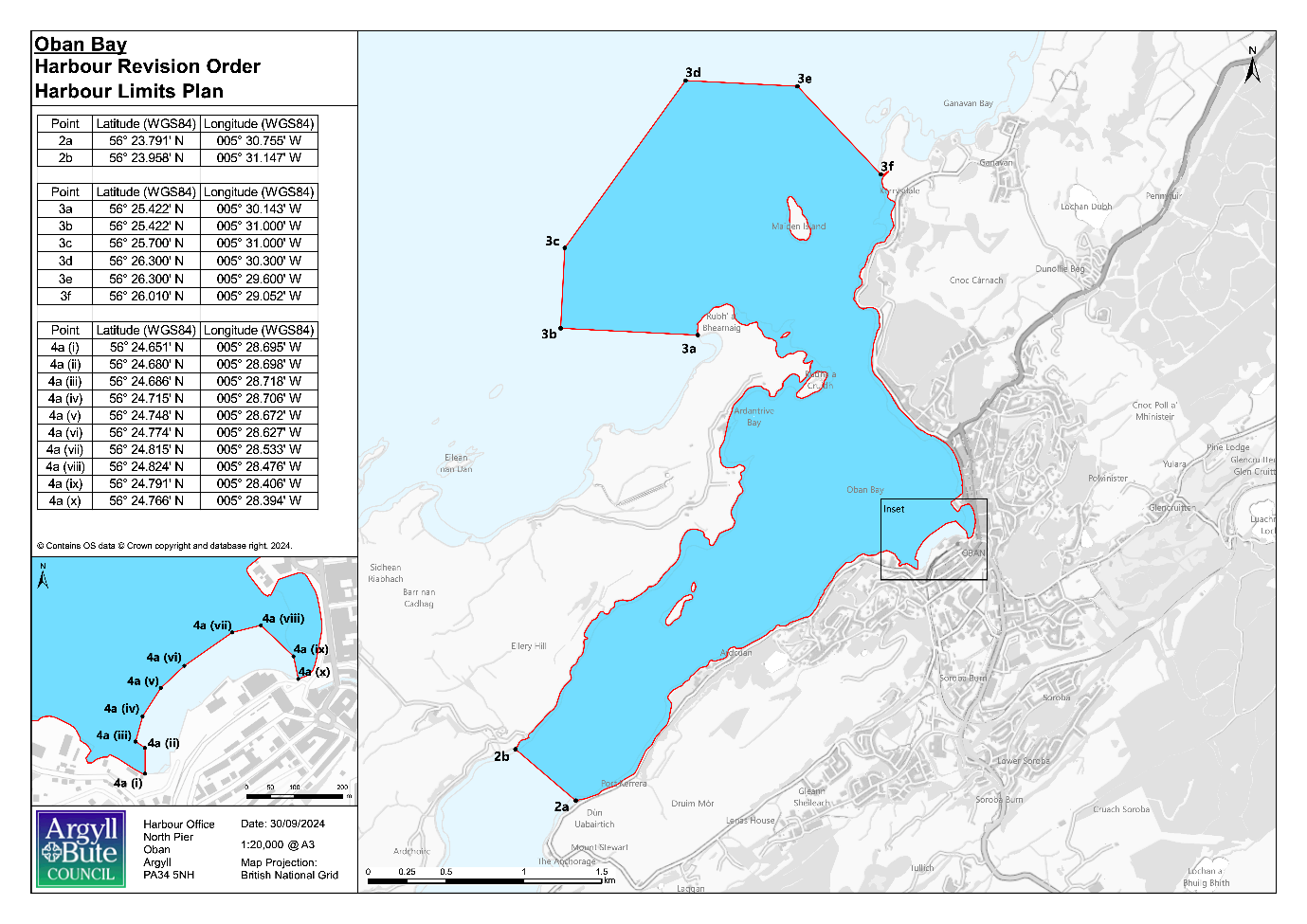
In support of the HRO application, marine consultancy and survey company ABPmer worked with the Council to develop a Navigational Risk Assessment (NRA) and associated mapping for the extension of the Statutory Harbour Authority area. This included the Bay’s approaches to the north and part of the Sound of Kerrera, based on mapping information identifying areas of intense vessel traffic use.




In support of the HRO application, ABPmer mapped the proposed extension of the Statutory Harbour Authority area limits for Oban Bay and approaches. Image credit: Argyll and Bute Council. Download full resolution at abpmer.co.uk
Monty Smedley, Maritime Associate at ABPmer, said: “We were very pleased to support the Council over an extended period, gathering vessel traffic data, analysing traffic patterns, working with stakeholders to understand Navigation Risk and supporting the Council with harbour limit mapping and marine safety management enquiries.”
Councillor Ross Moreland, Chair of Argyll and Bute Harbour Board, said: “The HRO process has required a clear focus on marine safety, with the Council working with all stakeholders to build on the current voluntary Code of Conduct for vessel traffic management, and to understand where improvements are needed in the backdrop of growth in ferry services, cruise vessel calls, marine recreational use and local fishing interests. Working with ABPmer, the Council has relied upon vessel traffic information to understand use and underpin marine risk assessments as essential information for the HRO process.”
ABPmer’s support of the successful HRO application reflects the company’s extensive experience providing specialist advice to port, harbour and marina owners and operators on new and change-of-use facilities, consents and licensing requirements, safety of navigation and environmental issues.