
As 2025 draws to a close, Historic England is celebrating 19 remarkable and unusual historic buildings and places that have been granted protection in England over the past year.
The protected sites range from a Neolithic burial mound dating to 3400 BC in the Yorkshire Dales to an exceptionally rare shipwreck lost in 1903 known as the Pin Wreck in Dorset, to ‘Dragon’s Teeth’ Second World War anti-tank defences in Surrey, to rare dockside equipment in Greenwich linked to major technological advances in undersea telecommunications which laid the foundations for today’s subsea optical cables that transmit internet traffic worldwide.
Newly listed historic gems added to the National Heritage List for England also include: the post-war dazzling Renold Building at the University of Manchester, Arts and Crafts gardens – one with a playful gnome garden in North Yorkshire; a school recognised for its neoclassical design in Birmingham and Adams Heritage Centre – a former Victorian ironmongers, time capsule of local trade and specialist in Norwegian ice skates.





They are joined by Victorian guide posts to help drivers in Cheshire, coal duty boundary posts in Essex – a tax on coal to help fund London’s development after the Great Fire of London in 1666, a gothic style Garden Chapel in the Midlands, a tin tabernacle church in Essex and the concrete 1980s workshop of architect Sir David Chipperfield.
Bude Storm Tower, affectionately known as ’the Pepperpot’ in Cornwall has had its list entry updated after being moved for a second time in its history due to coastal erosion; radical Liverpool Metropolitan Cathedral has been upgraded from Grade II* to Grade I and Draper’s Windmill, a rare working smock mill in Kent, has been upgraded from grade II to grade II* – the second highest grade.
Claudia Kenyatta and Emma Squire, Co-CEOs of Historic England, said: “These newly protected places demonstrate the remarkable diversity of England’s heritage. They connect us to the people and events that shaped our communities. From ancient burial sites to shipwrecks and wartime defences to post-modernist buildings, street furniture and Arts and Crafts gardens, these sites reveal the fascinating history that surrounds us all.”
Heritage Minister Baroness Twycross said: “Britain’s heritage is as varied as it is brilliant, with each of these buildings playing a part in shaping our national story over the centuries. This year alone we have protected 199 heritage sites, from neolithic cairns in the Yorkshire Dales to the fabulous Catholic Cathedrals in the heart of Liverpool. I’m proud that we’re safeguarding our rich history so future generations can continue to enjoy it.”
In total, 199 sites were added to the National Heritage List for England in 2025 (The List), comprising 173 listings, 21 scheduled monuments and five parks and gardens. A further 129 amendments were made to existing listings. The List is the official register of all nationally protected historic buildings and sites in England.
Share your photos, stories and memories with the Missing Pieces Project – the stories of these historic places are still being written – and they won’t be complete until you share your memories and first-hand experiences of these gems. Go online and share at https://historicengland.org.uk/listing/missing-pieces/
19 Highlights of New Listings, Designations, Listing Upgrades and List Amendments on the National Heritage List for England in 2025 by REGION are:
LONDON AND THE SOUTH EAST
– Submarine telephone cable hauler and gantry at Enderby’s Wharf, Royal Borough of Greenwich (Scheduled Monument)
– Dragon’s Teeth, Thorneycroft Wood, Guildford, Surrey (Scheduled Monument)
– Draper’s Windmill, St Peter’s Footpath in Dane Valley, Margate, Kent (Upgraded from Grade II to Grade II*)
– Cobham Mews Studios, 1 and 1a Cobham Mews, London (Listed at Grade II)
SOUTH WEST
– Wreck of an Admiralty Mooring Lighter, known as the Pin Wreck, located off St Albans Head, Dorset (Scheduled Monument)
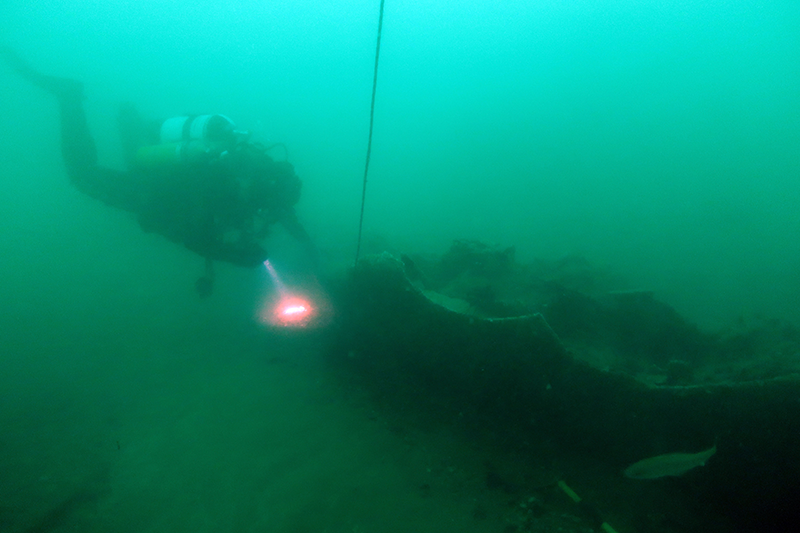
Diver diving the Pin Wreck – An Admiralty Mooring Lighter which sank in 1903 off the Dorset coast Protected as a Scheduled Monument. Image: Bournemouth University
Exceptionally Rare Shipwreck off the Dorset Coast – 19th Century Steam Mooring Lighter – Only known survival of its type: This exceptionally rare 19th-century steam mooring lighter, complete with Victorian equipment and early diving gear is known as the Pin Wreck due to hundreds of copper bolts visible on the seabed that once held the wooden hull together. The wreck is located 27m underwater off St Albans Head and is believed to be a Yard Craft 8, lost in 1903. Mooring lighters were specialised working vessels that laid and recovered heavy moorings and anchors that allowed ships to secure safely in harbours and anchorages. They could handle the enormous chains and equipment needed to maintain port operations. Only 47 mooring vessels operated across 20 naval dockyards during the late Victorian period and just four were steam-powered mooring lighters. This wreck represents the only known surviving example. Historic England recommended the site for protection following archaeological surveys by Bournemouth University.
– Bude Storm Tower, Compass Point, Bude, Cornwall, (Grade II List Amendment
– Sharlands House, Sharlands Lane, Braunton, Devon, (Listed at Grade II)
NORTH EAST & YORKSHIRE
– Dudderhouse Hill Neolithic Long Cairn, Long Scar, Yorkshire Dales (Scheduled Monument)
– Garden at Tudor Croft, Stokesley Road, Guisborough, Redcar & Cleveland, Tees Valley (Grade II Registered Park and Garden)
EAST OF ENGLAND
– Coal duty boundary post south side of Epping Road, Essex (Listed at Grade II) (one of 10 listed this year)
– Adams Heritage Centre, 17 Main Street, Littleport, Cambridgeshire (Grade II)
– Garden of Great Ruffins, Wickham Bishop, Essex (Grade II Registered Park and Garden)
– St Peter’s Church, Littlebury Green, Essex (Listed at Grade II)
NORTH WEST
– Renold Building, UMIST Campus, Manchester (Listed at Grade II)
– Liverpool Metropolitan Cathedral of Christ the King, Liverpool (Upgraded from Grade II* to Grade I)
– The three Ashley Parish guideposts, Ashley, Cheshire (Listed at Grade II) LIST ENTRIES:1492582, 1492586, 1492587
THE MIDLANDS
– Bournville Radio Sailing and Model Boat Club Boathouse and Associated Concrete Boating Pond (Listed at Grade II) LIST ENTRY
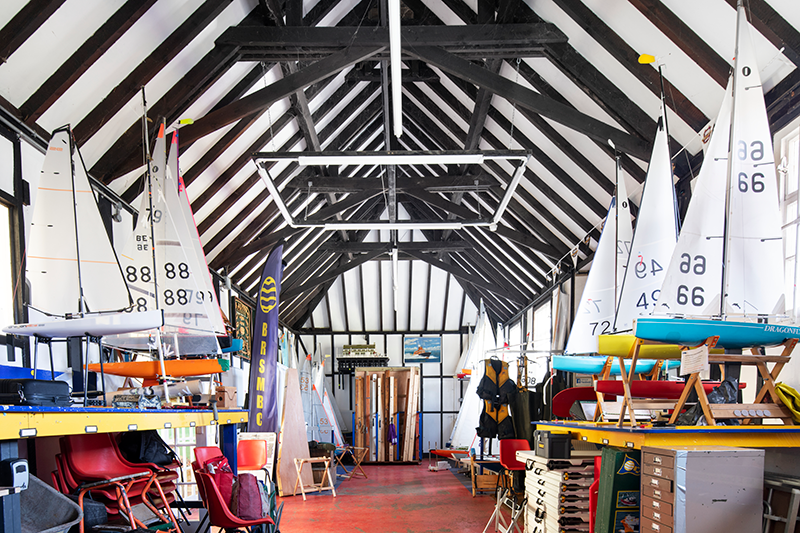
Nod to the Cadbury family who set up unemployment relief scheme in the 1920s
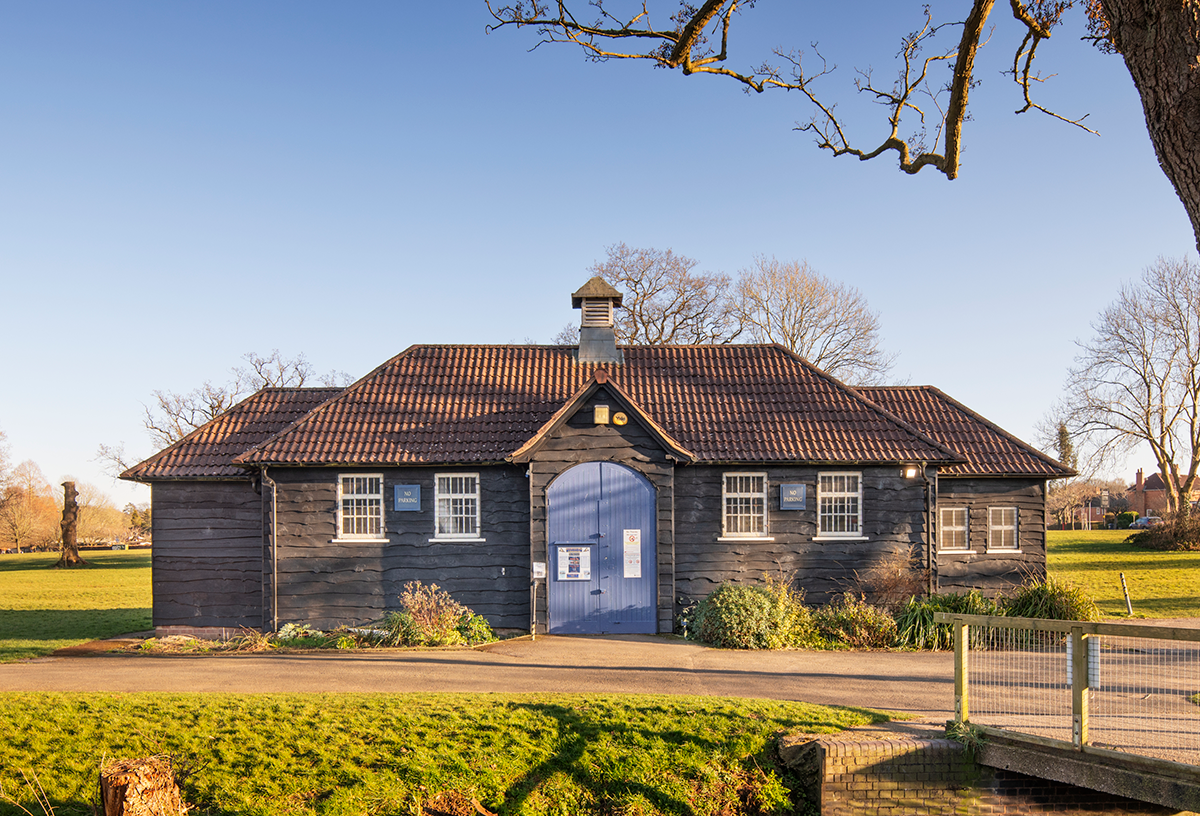
Bournville Radio Sailing and Model Boat Club’s boathouse and boating lake are an important part of Birmingham’s social history. Built in 1933, the boathouse and its distinctive teardrop-shaped lake are an example of the philanthropy of the Cadbury family of chocolatiers, known for their concern for employee welfare. Cadbury hired 64 men who were long-term unemployed and not eligible for state benefit to build the club and boating lake. Workers spent four days a week on construction and the fifth day attending carpentry or gardening classes, to help increase their chances of future employment.
With only 11 pre-war model boating clubhouses remaining in England, Bournville’s is an exceptionally rare building. The listing at Grade II recognises both the careful craftsmanship of the timber-framed boathouse with its tall doors and pantile roof, purpose-built to accommodate fully rigged model yachts, and its cohesive design scheme – linking both the building and lake and the Cadbury family’s philanthropy.
– King Edward VI Handsworth School for Girls, Rose Hill Road, Birmingham, (Listed at Grade II*)
– Broxwood Court Garden Chapel, Bonds Green Road, Chapel, Bonds Green Road, Pembridge, Lower Broxwood, Herefordshire (Listed at Grade II)