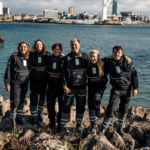
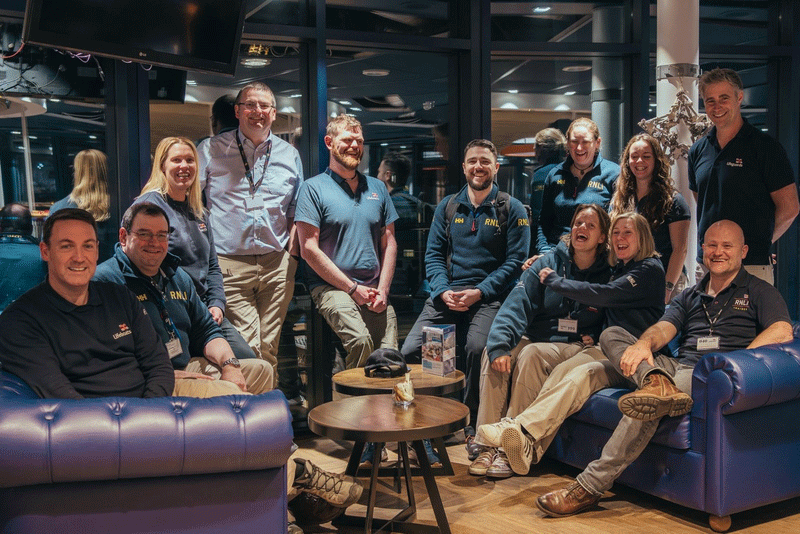
The Casualty Care Training Team at the Royal National Lifeboat Institution (RNLI) has been recognised globally as they were runners up for the International Maritime Rescue Federation (IMRF) Innovation & Technology Award.
The team members were honoured for their specialist medical training in preparing RNLI volunteer lifeboat crews and lifeguards to provide casualty care in challenging maritime and coastal environments. They were announced as runners up of the award at a special ceremony, recognising the work of individuals and organisations in search and rescue, in France on Wednesday 25 November.
Emma Zaple, Clinical Training Lead at the RNLI, said: ‘Every year, we provide more than 500 courses to more than 5,000 operational personnel, including lifeguards and volunteer lifeboat crews, ensuring they are ready to provide casualty care in the most challenging conditions on the coast.
‘We’re really proud this work has been recognised and we’re extremely grateful to everyone who voted for us. We will continue adapting and enhancing this training to ensure our people are ready to save lives at sea.’




Peter Sparkes, RNLI Chief Executive, said: ‘We are incredibly proud that the RNLI Casualty Care Training Team has been recognised as runners-up in this award. Their work is a vital part of our ability to save lives at sea.
‘Every year, they equip thousands of lifeboat crew members and lifeguards with the practical skills, confidence and decision-making tools needed to provide expert casualty care in some of the most challenging environments imaginable.
‘This recognition is richly deserved. While their work often takes place behind the scenes, its impact is felt on every rescue where casualty care helps preserve life, reduce suffering and give people the best possible chance of survival. On behalf of everyone at the RNLI, I would like to congratulate the team and thank them for their dedication, professionalism and contribution to saving lives.’
The training is centred on a highly practical three-day programme that uses realistic casualty simulations, moulage, scenario-based learning and bespoke casualty care check cards to build competence and confidence. The curriculum focuses on hands-on treatment, decision-making and casualty management in maritime and coastal environments, rather than complex clinical theory.
The team continually updates content in response to emerging medical evidence, operational learning and changes in national guidance.
Trainers are also directly involved in developing casualty care check cards and implementing major clinical changes, ensuring rapid translation of best practice into frontline operations.