





 Chris Hoffman, Director of Technology Strategy at safety and survival equipment specialist ACR Electronics, says it is time for regulators to re-evaluate the need for pyrotechnic devices, to embrace the modern alternatives and make electronic flares permissible.
The sea will always be dangerous. Whether the cause is a storm, damage, equipment failure, accident or injury, the possibility of an emergency requiring swift rescue must be considered by all who venture out on the water.
Our tools for survival do not need to add to that risk. A ‘safety’ device should not put anyone in fear of injuring themselves or damaging the boat or liferaft.
Pyrotechnic flares exacerbate the risks at sea. Raising issues for user safety and the environment and creating problems on land with disposal, transportation and storage, pyrotechnics belong to a time when fire and smoke were the simplest ways to attract attention.
In today’s age, a formidable array of reliable electronic safety tools and advanced modern alerting and locating systems are available, including the logical alternative to pyrotechnic flares – Electronic Visual Distress Signal Devices (eVDSDs), or electronic flares.
Despite the accessibility of this advanced technology, the mandatory carriage of pyrotechnic flares persists. They are still Safety of Life at Sea (SOLAS) requirements and are mandated by the Maritime and Coastguard Agency (MCA) for all yachts over 13.7m.
Even for boats which do not by law have to carry flares or other life-saving equipment, pyrotechnic flares remain the recommended solution for distress signalling. Leisure boat owners can still face a potential fine in some countries if they have out-of-date flares onboard.
Is it not time for regulators to embrace the alternatives and make eVDSDs permissible?
CALL FOR CHANGE
The problems with pyrotechnics provide proof that the maritime world is ready for the next transition. These drawbacks include:
Safety
Pyrotechnic flares burn at over 1,000°C, often emitting molten slag and sparks together with smoke and a flame – all of which can come back at the user in high winds. Many mariners can relate stories of burns, fires and close calls when trying to deploy them. Additionally, flares are one shot devices. There is no way to test them to be sure they work.
Toxicity
Most red handheld and rocket flares rely on strontium nitrate and similar chemicals that are both toxic and environmentally persistent. The smoke can be full of fine particulate matter that can be inhaled into the lungs, while also irritating eyes, nose and throat.
Disposal
Once expired – usually after three years – they become hazardous waste. Coastguards and police forces across Europe and the UK have been overwhelmed by the demand for safe flare disposal, with some mariners resorting to hoarding old flares in sheds or illegally dumping them.
Reliability
Pyrotechnic flares can fail. They can get damp, be damaged in storage or simply not ignite when needed or, in rare cases, explode when ignited. Even when they function correctly, their window of effectiveness is fleeting, with a red handheld burning for about a minute. A rocket flare launches skyward, blazes for about 40 seconds, and then is gone.
Transportation and Storage
Flares contain explosives and are therefore classified as Class 1 dangerous goods which means shipping and transportation is difficult and expensive. The same rules and regulations apply to time-expired flares. Flare canisters clutter lockers and demand careful storage away from damp conditions and potential heat sources.
TODAY’S SAFETY TECHNOLOGY AND INNOVATIONS
The modern toolkit of safety encompasses a range of reliable devices, far superior to the brief flicker of a pyrotechnic flare’s flame. They are continuous, reliable and integrated into a global rescue infrastructure.
Emergency Position Indicating Radio Beacons (EPIRBs): Use satellite constellations like Cospas-Sarsat, GPS and Galileo to transmit a vessel’s position to rescue coordination centres anywhere on the globe.
Automatic Identification System (AIS) transponders: Broadcast a message and vessel position to every nearby ship equipped with AIS.
GMDSS DSC radios: Provide voice communication to coastguards and other vessels together with their location, while Survival Craft VHF radios, acting as GMDSS portable radios can be used to either call for help on VHF Channel 16 or talk to rescuers.
SARTs (Search and Rescue Transponders): Create either a radar or AIS target, allowing searchers to home in precisely on a vessel or liferaft.
PLBs (Personal Locator Beacons) and AIS MOB (Man Overboard) devices: Include PLBs with Return Link Service (RLS) which means the beacon not only transmits a distress signal and precise GPS location via the global Cospas-Sarsat satellite network — it also sends a message confirming that the user’s distress alert and location have been received.
ENTER THE ELECTRONIC FLARE
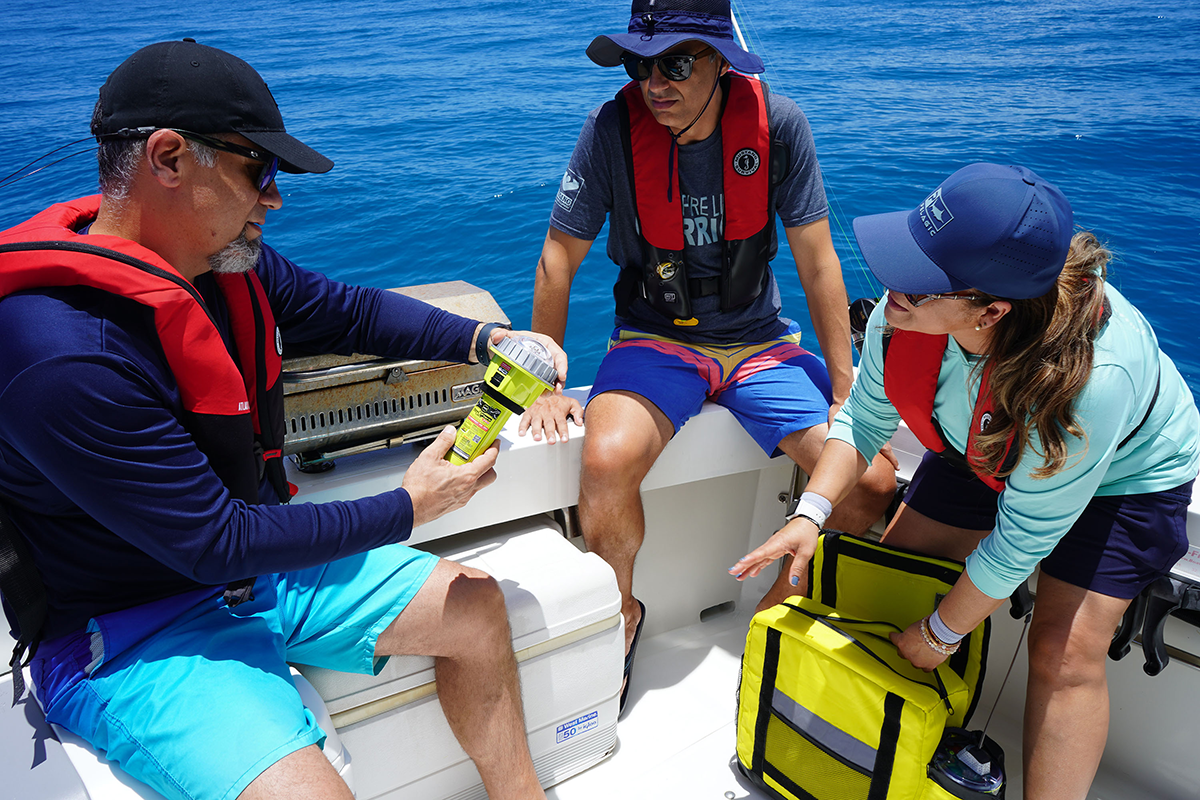
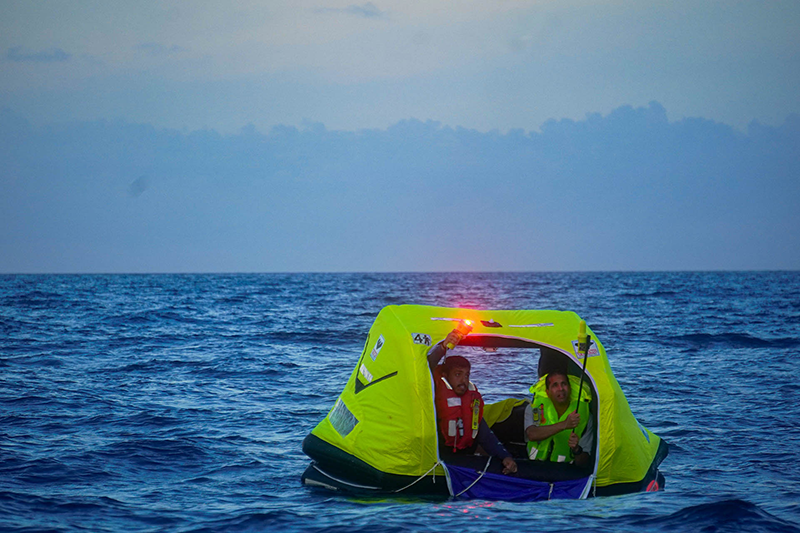
Used in combination with these devices, eVDSDs emit bright strobing LED patterns visible for miles. They are compact, waterproof and rugged, and can operate continuously for hours. Many incorporate infrared strobes detectable by night-vision equipment worn by search and rescue personnel.
Unlike pyrotechnics, they can be tested safely, reused and either be recharged or fitted with new batteries. They do not expire with a three-year shelf life, do not produce toxic waste and do not risk setting a liferaft ablaze or potentially injuring the user or other crew.
Aside from the difference in operating lifetime, the only other real distinction is that a pyrotechnic flare is always going to be brighter than an electronic flare. However, this no longer matters. Electronic flares provide a light that can be seen from several miles away, which is more than sufficient when combined with other systems.
Some eVDSDs have been specifically designed to comply with the requirements of the International Maritime Organisation (IMO) Convention on the International Regulations for Preventing Collisions at Sea, 1972, as amended (COLREGs) and act as a potential replacement for some pyrotechnic devices. eVDSDs that comply with Radio Commission for Maritime Services (RTCM) Standard 13200.0 are such devices.
REGULATORY MOMENTUM IS BUILDING
Regulations related to the carriage of lifesaving appliances (LSA) on vessels at sea broadly fall into two areas: those subject to Conventions of the IMO, namely cargo and passenger vessels of 500 gross tonnage and over engaged on international voyages, and other vessels which are generally subject to national regulations.
For the IMO and the MCA, the task is simple: approve electronic flares as an equivalent carriage option so that they are recognised internationally as a distress signal, and then consider phasing out pyrotechnics over a defined period.
Accordingly, it is time to establish an International Standard for eVDSDs that could be adopted by IMO and other maritime agencies, and to expedite changes to international conventions and national regulations that would allow the carriage of modern alternatives to pyrotechnic devices, including eVDSDs, instead of pyrotechnics.
Encouragingly, the movement is already underway. RTCM has developed a performance standard for eVDSDs. The U.S. Coast Guard’s acceptance of these devices for recreational boats sets an international precedent. Manufacturers in Europe and Asia are pushing for parity, developing multi-colour strobes and eFlares.
Electronic flares are safer, cleaner, longer-lasting and already proven in service. With EPIRBs, AIS, GMDSS DSC radios, Survival Craft VHF radios and SARTs onboard, the arguments against pyrotechnics are overwhelming.