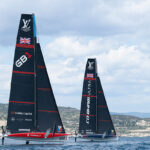

After battling the conditions faced in the Roaring Forties, the 10 teams competing in the Clipper 2025-26 Race have arrived into Fremantle, Australia.
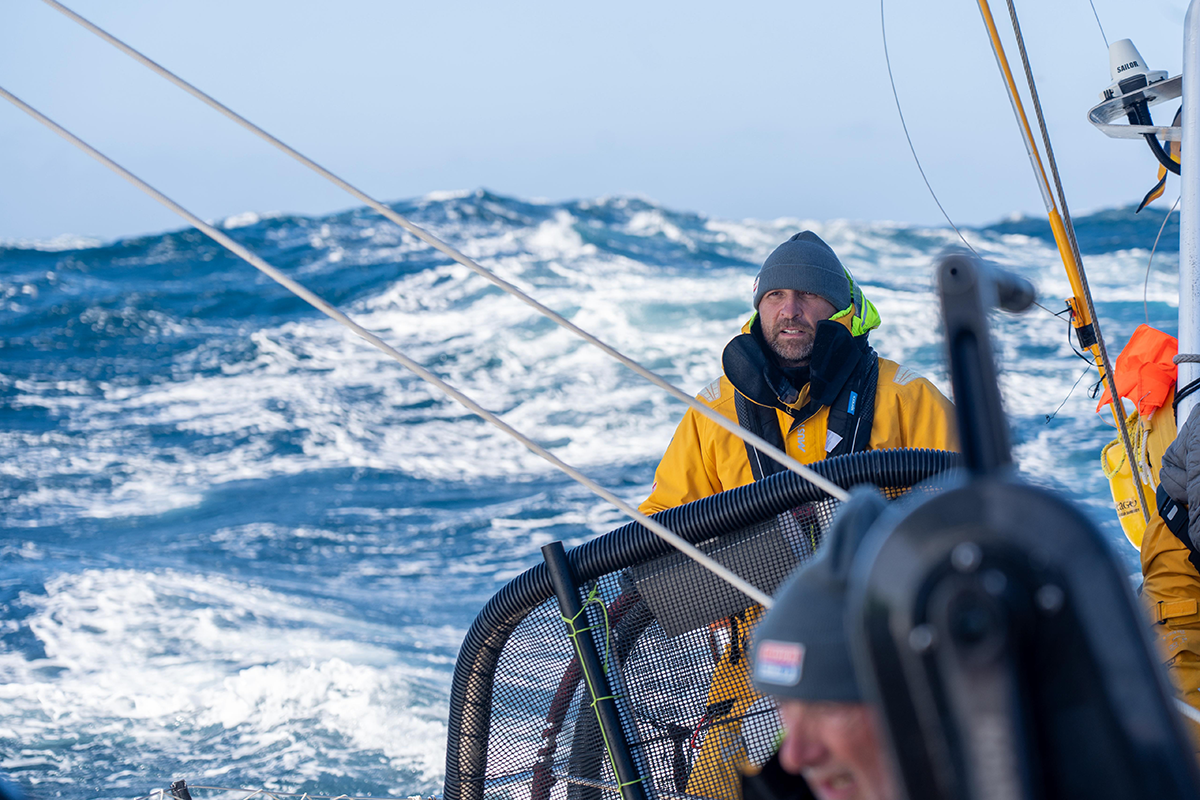
After departing Cape Town, the teams battled wind speeds of up to 50 knots, sea states so immense they are technically classified as ‘phenomenal’, and freezing temperatures. Leg 3 is one of the most testing sections of the Clipper Race circumnavigation with the Roaring Forties one of the most remote places on the planet, where few sailors venture.
What makes this challenge even more remarkable is that it was achieved by crew who are non-professional sailors – who have been trained to cross oceans and learn to live on board a yacht stripped of life’s luxuries – with twenty other adventurers. With the ocean and its conditions not discriminating to whom it throws its worst – this is a true test of both physical and mental physical endurance.





As summed up by 22-year-old chef, Lucy Stocks, who is taking on four legs of the Clipper 2025-26 Race, with the first being the Roaring Forties leg: “It’s relentless, cold and wet but it’s been the best time of my life. I have loved every single moment of it.
“I had previously done some family sailing holidays, but they were more about sunbathing than sailing - it wasn’t until I was about 15 until that I realised this was something I was interested in. Sailing an ocean then became an unconditional in my life!”
Known as one of the biggest challenges of the natural world, the everyday adventurers that take on the Clipper Race need no previous sailing experience before embarking on the record breaking 40,000 nautical mile endurance test around the globe.
Four stages of mandatory training are provided to each member of Race Crew before they start their challenge- equipping non-professionals with the sailing knowledge to tackle up to six ocean crossings, and to live for weeks at a time at sea with up to 22 other people.
Throughout the 11-month adventure, Race Crew will face conditions usually reserved for only the elite sailing professionals of the world. Think storm force winds, waves higher than two-storey houses, working through searing hot and freezing cold temperatures, electrical storms, waterspouts and squalls, all whilst racing for 24 hours a day.
Speaking about the conditions the fleet had experienced over its 20 plus day race across the South Indian Ocean, Race Manager Hannah Brewis said: “Over nearly 5,000 nm of racing, the fleet has certainly seen its fair share of weather. The Roaring Forties is unforgiving between professional and novice. It serves up the same high winds and big seas no matter your previous experience.
“They have faced back-to-back weather fronts bringing very high winds and big seas, with most boats consistently reporting wind strengths of 30 knots or more and rough conditions.
“This type of weather is typical of the Roaring Forties, which is famous for the large low-pressure systems that sweep across the South Indian and Southern Oceans. When a front passes, conditions can be quite challenging, intense squalls and large wind shifts make sailing fast and in a straight line difficult, even with the strong winds.”
A UNIQUE WAY TO SEE THE POWER OF NATURE
Having faced weeks of life on the ocean, arriving into port is often a moment of intense pride for the crew who choose to take on this battle with Mother Nature, and as multi-legger Race Crew on the current edition, Abigail Shanahan explains: “it’s really hard to describe if you haven’t experienced it. The Roaring Forties were definitely as expected! They were really challenging at times, but this crew are amazing. We lean on each other in hard times, and we get through it with a lot of laughter. The hardest part was the cold and the constant, constant wet but overall, it’s created lifelong memories.
“We have had such an amazing opportunity to experience something that is so authentically itself. This is one of those places that is still very much untouched by man, everything is almost as it was at the beginning. And it was amazing not see a single other soul for almost three weeks – no boats, no planes, just us. A great bonding experience and a unique way to see the power of nature.”
THE CLIPPER 2025-26 RACE SO FAR
Having set off from Portsmouth UK on 31 August, the Clipper Race fleet will make 14 stops as it races around the globe, crossing the Atlantic twice, dipping into the deep southerlies of the Roaring Forties and taking on the mighty North Pacific (the only round the world race to take on this feat).
With almost 15,000nm of racing completed, Max Rivers, Deputy Race Director sums up the action seen so far on this edition: “The Clipper 2025-26 Race has so far been a fast and wild ride. From its very beginning, a stormy crossing of the Bay of Biscay taught the crew how to deal with some of the harshest conditions, even when they were so close to home.
“This laid a strong foundation for the race going forward with a brilliant downwind run down for the first Atlantic Ocean crossing, some amazing race tactics watching the gybing battle in the Canaries and Cape Verde Islands before the first of two equator crossings in the full circumnavigation. The fleet then had a real variety of conditions down the east coast of South America on its final approach to Punta Del Este, Uruguay.
“Setting off on Leg 2 across the South Atlantic, the fleet caught on perfectly to the low-pressure systems that roll though this area of the globe. This led to a wet and wild downwind ride, and the fastest Clipper Race crossing of the South Atlantic from Punta Del Este to Cape Town in our history, followed by amazing arrivals under the iconic Table Mountain.
“Leaving Cape Town in 40-50 knots of wine, the fleet flew out of the bay straight in to clutches of a wind hole that forced the yachts into some light wind tactics for a number of hours before managing to get their boats pointing south. What followed was an epic three weeks of downwind sailing with five low pressures rolling over the boats. The fleet certainly became adept at managing the constantly changing conditions.
“The final low pressure came through at the perfect time to squeeze the high-pressure ridge that generally sits of the coast of Southwest Australia, allowing the fleet to transition to the southerly breeze whipping up the coast of Australia. This allowed the boats to push in at pace to the Finish Line. With the local Fremantle Doctor bringing the strong winds each afternoon and light winds plaguing the mornings, boats were faced with uncertainty once they rounded Rottnest Island of a short fast transit to the line.”
Applications are now open for the 2027-28 edition, with still time to train to take on the latter stages of the Clipper 2025-26 Race through a Fast-Track Training programme. Find out more at clipperoundtheworld.com/apply