







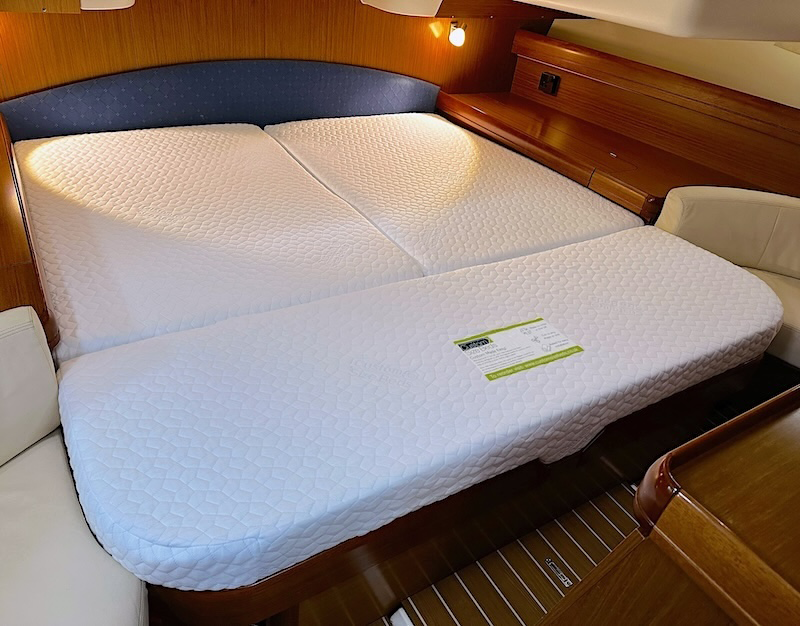
Mattress expert Myles Hardy, from Custom Size Beds, has issued a warning to anyone sleeping on board over the autumn and winter months.
Myles has warned boat owners that colder temperatures, limited ventilation and warm air inside cabins can create the perfect conditions for condensation to form beneath mattresses – “trapping moisture against the hull or bed base and creating an ideal environment for mould, mildew, and strong musty odours.”
Why do you need to let a boat mattress breathe?
Boat cabins are naturally more humid than homes. Mattresses absorb moisture from the air, from body heat and from condensation forming against the hull. Allowing them to breathe lets this moisture evaporate instead of becoming trapped.
Good airflow also helps regulate temperature overnight – especially important with foam mattresses, which retain heat.
What are the consequences of not allowing a mattress to breathe?
Without ventilation, moisture becomes trapped inside the mattress and underneath it. On boats, this is one of the biggest causes of:
- mould and mildew
- persistent musty, damp odours
- black spotting on fabrics
- premature deterioration of the foam
Over time, this can reduce comfort and shorten the lifespan of both the mattress and the bunk base.
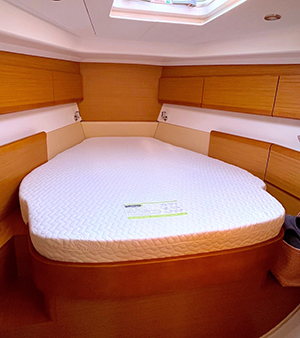 Can using a heated blanket or cabin heater impact moisture around the mattress?
Yes, particularly on boats. Heating the cabin increases humidity. When this warm, moist air meets the cold hull underneath the mattress, it’s more likely to condense. A heated blanket is perfectly fine to use – just avoid leaving it on constantly, and ensure the mattress can ventilate properly. Maintaining steady airflow is key.
Can turning your cabin heating on affect the mattress or bunk frame?
It can. Rapid changes between cold hull temperatures and warm cabin air can cause materials to expand and contract slightly, and increase humidity levels inside the cabin. Keeping a steady, moderate temperature and ensuring airflow is the best approach.
What are some simple ways to make a boat mattress more breathable?
- Use a slatted or ventilated bunk base.
- Avoid placing the mattress directly on a solid board or hull surface.
- Add a marine ventilation underlay (dry-mesh) beneath the mattress.
- Lift or air out the mattress regularly, especially after cold nights onboard.
- Choose breathable covers or fabrics designed for marine conditions.
What are your top tips for keeping a boat mattress in top shape over autumn and winter?
- Air the cabin and mattress regularly – even propping the mattress up every few weeks helps.
- Rotate the mattress (if suitable) every 2–3 months.
- Use a washable, breathable protector to manage moisture and salt air.
- Keep heating consistent – avoid sudden temperature spikes.
- If leaving the boat unused, consider storing the mattress upright to allow airflow around it.